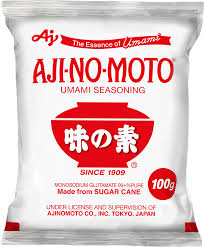
If you grew up in a Nigerian home in the 80s, 90s, or early 2000s, chances are you heard one warning over and over again:
“Don’t use white Maggi!”
Some families claimed it caused hypertension. Others said it could lead to stroke, blindness, or mysterious illnesses. In many homes, it was completely banned.
But here’s the interesting part: most of those same families were unknowingly consuming the very thing they were trying to avoid.
So how did AJI-NO-MOTO®, popularly known as “white Maggi,” become one of the most misunderstood food seasonings in history?
The Origin of the Fear
The controversy dates back to 1968 when a doctor in the United States wrote a letter describing numbness and dizziness after eating at a Chinese restaurant. He speculated that Monosodium Glutamate (MSG) might have been responsible.
The media quickly picked up the story and coined the term “Chinese Restaurant Syndrome.”
As the story spread across the world, MSG developed a bad reputation despite years of scientific research that failed to establish it as the cause of those symptoms in the general population. Unfortunately, the fear had already taken root and eventually reached Africa, including Nigeria.
Why Nigerians Called It “White Maggi”
Unlike the familiar brown seasoning cubes, AJI-NO-MOTO comes in the form of white, crystal-like granules that resemble sugar or salt.
To many people, it simply looked like a laboratory chemical rather than a food ingredient.
That appearance alone fueled countless rumours. People claimed it caused high blood pressure, kidney problems, stroke, blindness, and even sudden death. None of these claims were backed by solid scientific evidence, but they spread rapidly through word of mouth.
The “Lazy Cook” Label
Another reason many households rejected it had nothing to do with health.
AJI-NO-MOTO is pure MSG, a flavour enhancer that boosts the savoury taste (known as umami) in food. Even a simple soup can taste richer with just a small amount.
Because of this, many experienced mothers and grandmothers believed using it was a shortcut. In some homes, it became associated with people who couldn’t cook properly.
A good cook, they argued, should rely on fresh ingredients, crayfish, stock, pepper, onions, and long hours of cooking—not “white Maggi.”
As a result, using it became almost a badge of laziness in some communities.
The Great Irony
Here’s where the story becomes truly fascinating.
Many families proudly refused to allow AJI-NO-MOTO into their kitchens, believing they were avoiding MSG.
Yet almost every day they used seasoning cubes such as Maggi, Knorr, Royco, and similar brands.
What many people didn’t realise was that these seasoning cubes often contain Monosodium Glutamate (MSG) as one of their ingredients.
In other words, they weren’t avoiding MSG at all—they were simply rejecting the pure, unblended version while happily consuming it in mixed seasonings.
What Does Science Say Today?
Today, major international food safety authorities, including the World Health Organization (WHO), the Food and Agriculture Organization (FAO), the U.S. Food and Drug Administration (FDA), and the European Food Safety Authority (EFSA), consider MSG safe for the general population when consumed in normal amounts as part of food.
While a small number of people may report temporary sensitivity after consuming large quantities without food, decades of research have not supported the widespread belief that MSG causes the long list of illnesses often attributed to it.
As with salt and other seasonings, moderation remains important.
Looking Back
The story of “white Maggi” is one of the greatest food myths many Nigerians grew up with.
A combination of global misinformation, local rumours, and cultural beliefs transformed a simple flavour enhancer into something many families feared.
Ironically, countless homes that banned AJI-NO-MOTO continued using seasoning cubes containing the same ingredient every single day.
So here’s the question for tonight’s discussion:
Did your family ban “white Maggi”?
If they did, what reason were you given?
Was it said to cause stroke, hypertension, blindness, “wash the stomach,” or something even more interesting?